Penne Puttanesca

on Feb 25, 2025, Updated Jun 18, 2025
This post may contain affiliate links. Please read my disclosure for more info.
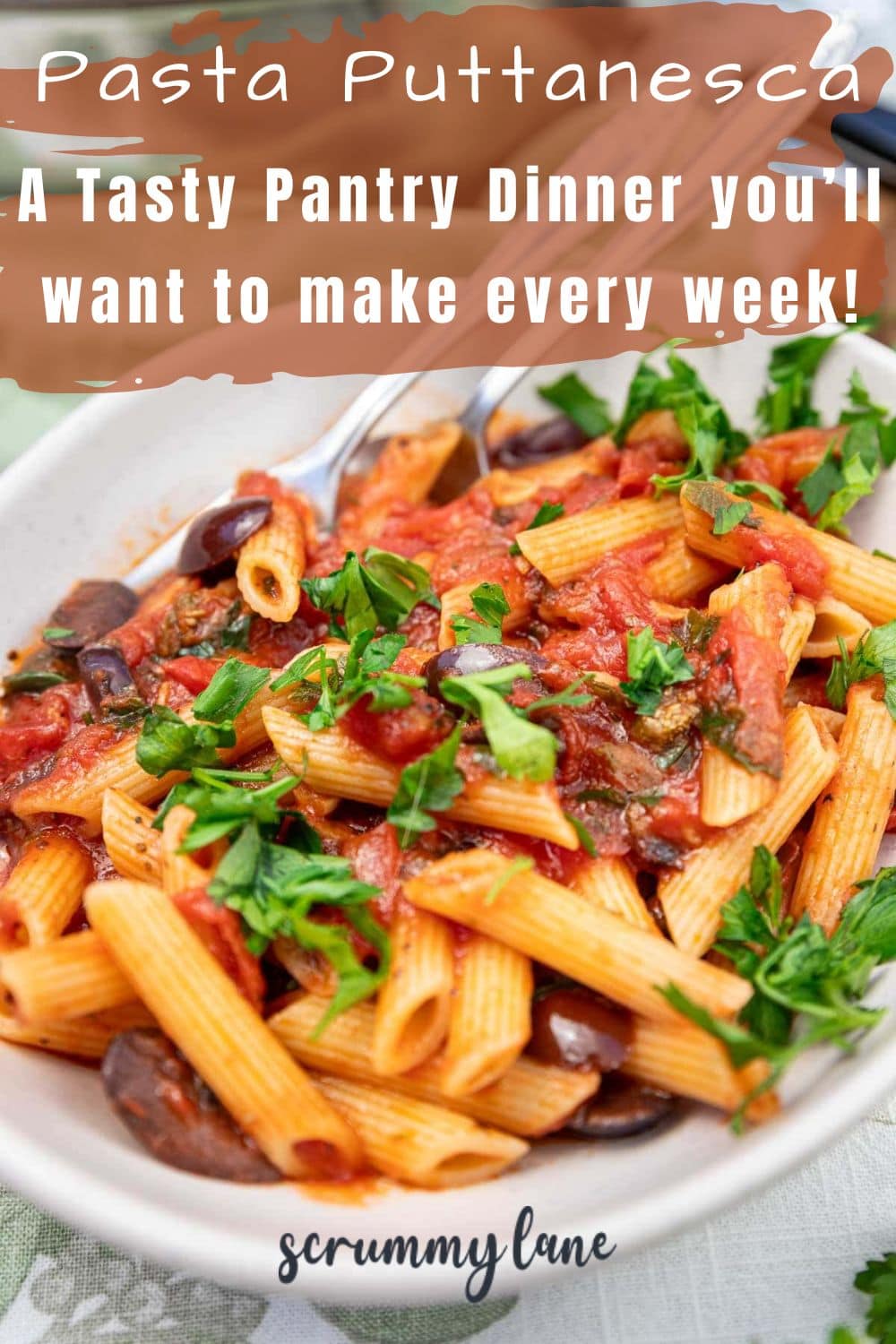
This bold, flavor-packed, and (best of all!) super easy penne puttanesca may well blow your mind. Just like marinara, the sauce is tomato based, but a few ultra fragrant ingredients such as capers, anchovies and olives give it a delicious salty, umami kick.
You’ll end up with a restaurant quality dinner in less than 30 minutes that you’ll want to make again and again!
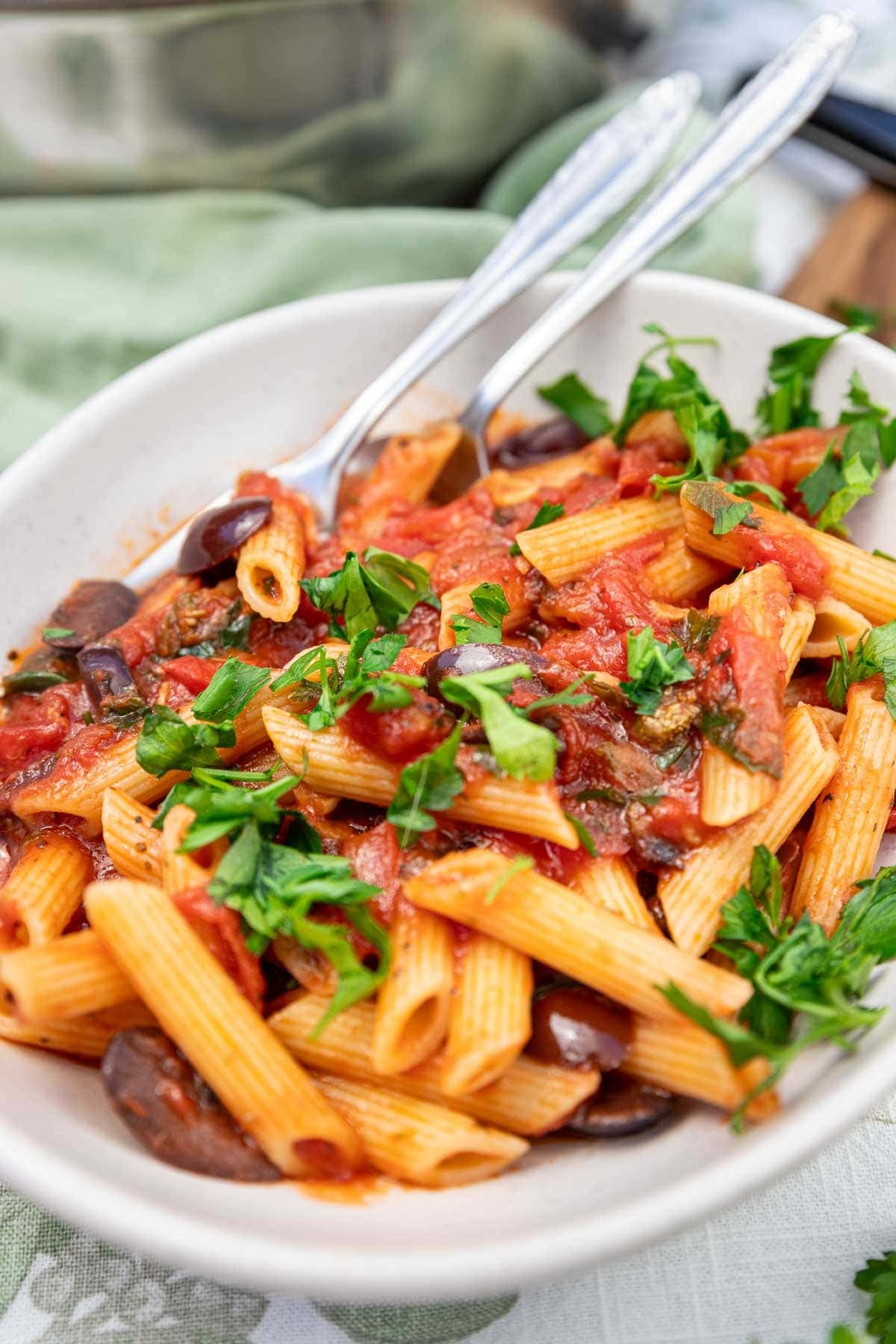
Penne puttanesca is a perfect example of the kind of recipe I most love to showcase here on Scrummy Lane.
Similar to pasta with marinara sauce, pasta alla norma, or pasta carbonara, it’s so simple that you wonder how tasty it could possibly be. But make no mistakes, this variation of a classic from the Naples area of Italy makes an incredibly tasty dinner, mostly thanks to a few punchy flavors including capers, anchovies (don’t worry, it won’t tasty ‘fishy’), and olives.
It’s important to try to use the best quality ingredients you can, to make this recipe for penne puttanesca the very best version of itself. Enjoy!
Here’s a summary of what I think you’ll love, then I’ll tell you everything you need to know to get it right first time.
- Packed with flavor! The first time I tried this puttanesca pasta, I just couldn’t believe how tasty it was. You don’t even need any cheese on the top (although I won’t criticize you if you do add some!).
- Quick and easy. To say this recipe is simple is an understatement. You don’t really even need precise quantities – just throw it all in! After a little bit of prep, let the sauce simmer on the stove, and dinner is ready within 30 minutes.
- Inexpensive. You’ll get a restaurant quality meal out of pretty economical ingredients. It’s a win-win situation!
- Such a versatile sauce. The most classic way to serve the sauce is mixed into pasta, but it’s also delicious served over fish or meat as a sauce, spread onto pizza, or in other ways I’ll mention below.
About the ingredients
You’ll find a full list of ingredients with amounts in the recipe card below. But here’s a summary of what you need to know.
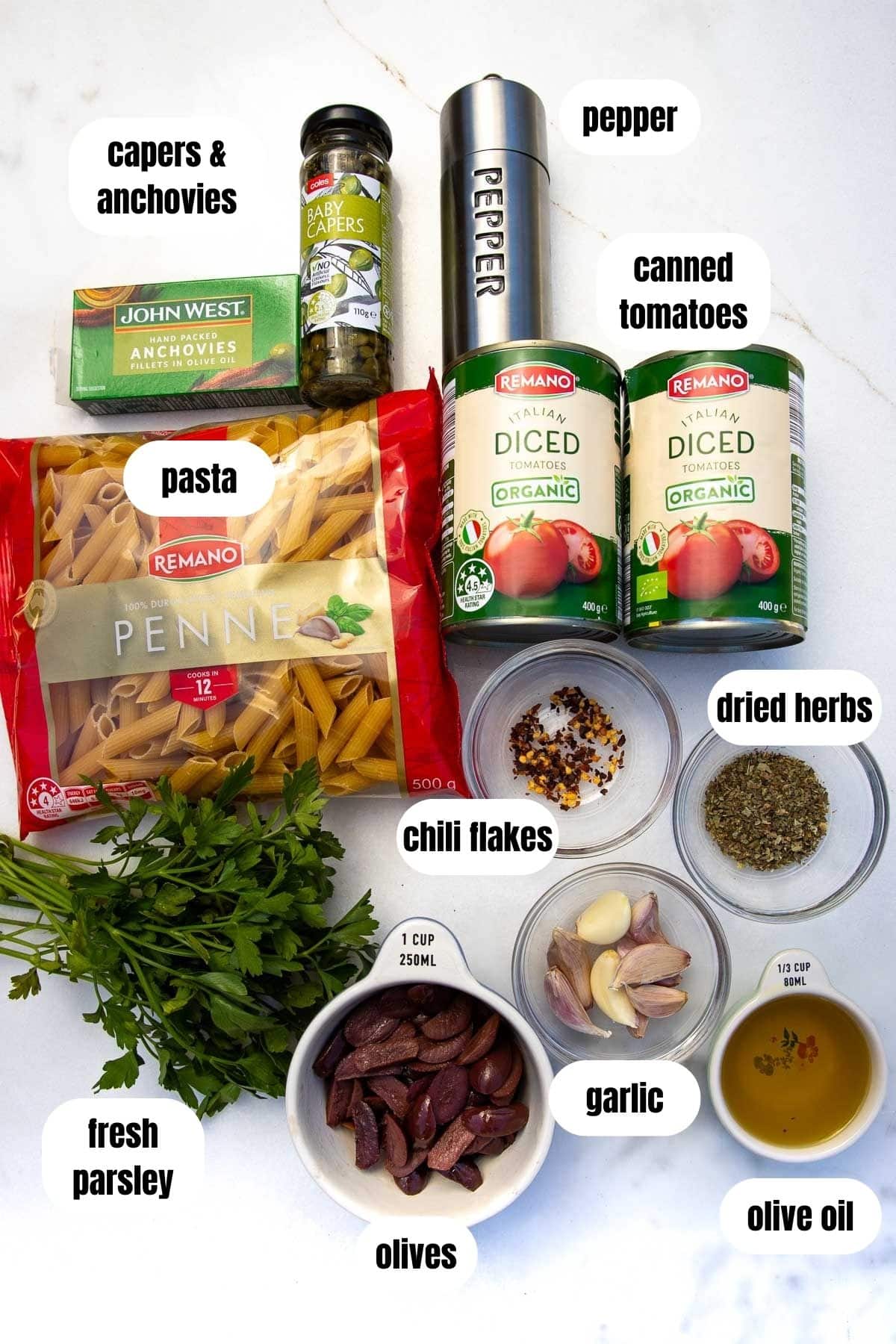
The most important tip I have for you is to try to use good quality ingredients. And don’t skip any of them. Each of these simple ingredients contributes something unique to the overall deliciousness of the dish!
- Olive oil: You may be surprised how much olive oil you start the puttanesca sauce off with. But you’ll understand when you see the silky, almost luxurious texture you end up with. Try to use a good quality extra virgin olive oil, from a single origin if possible.
- Garlic: You’ll notice that the recipe includes lots of garlic! I recommend slicing it thinly rather than crushing it. This adds texture to the sauce, and it won’t burn as you’re cooking it in the oil.
- Anchovies: Not an anchovies sort of person? Don’t worry, they’re more for a general salty, umami flavor rather than an overtly fishy taste. Try the recipe and you’ll see immediately what I mean. You can get anchovies in oil or brine in a jar or small can. Go for the smallest amount possible since you only need around 6. You can freeze the rest.
- Canned tomatoes: For ease, I go with diced or crushed tomatoes. Some chefs recommend ‘San Marzano’ tomatoes. Other highly regarded ones include Nina, La Valle, or Fontanella Italian tomatoes. Some also say that whole peeled canned tomatoes are better quality (Martha Stewart seems to agree). If you want to test the theory, try ‘snipping’ them while still inside the can with kitchen scissors! Canned cherry tomatoes can work really well, too, although they can be expensive.
- Black olives: The olives need to be roughly chopped, so it’s best to go with pitted olives. I like Kalamata olives. If they still have the pit in, just roughly chop around them – it’ll only take a minute or two. Ready-chopped from a jar might be more convenient, but I don’t find them as juicy and tasty.
- Capers: You’ll usually find these in a jar with brine. Find them in the canned goods/marinated vegetables aisle. Any leftovers will keep well in the fridge for quite some time.
- Chili flakes: Just a pinch! I usually go with around a quarter of a teaspoon, but you can go up to half a teaspoon if you like more heat.
- Dried herbs: I like oregano and basil, or mixed Italian herbs. There’s some versatility here!
- Fresh parsley: Definitely don’t skip this! You’ll add it at the end of the cooking time for lovely fresh flavor and color. If you have it, a little fresh basil can be nice, too.
- Seasoning (salt and pepper): Both of these are optional. I usually grind in a little black pepper, but extra salt is optional. The anchovies, olives and capers are already quite salty. I recommend tasting the sauce just before serving. Only add more salt if you think it needs it.
- Penne pasta: The all-important pasta! I like making this dish with penne pasta because it’s easy and satisfying to eat. Also, the tubes and ridges are perfect for holding up to and grabbing onto the chunky, rustic sauce. Other shapes can work well too, however, such as fusilli (spirals), rigatoni (larger tubes), or spaghetti or linguine, the more classic choices.
A note about sweetness: I do usually add a little sugar or honey to tomato based sauces to balance the acidity. I don’t add any to my puttanesca sauce, however, since the flavors are supposed to be tangy and briny rather than sweet. If you do prefer more sweetness, try adding a teaspoon, then taste before deciding whether to add more.
How to make penne puttanesca
You won’t believe how easy this true pantry dinner is!
Start by pouring all of that lovely olive oil into a big heavy and wide pan. Heat it on a medium heat, then add the garlic and anchovies. Stir for a minute or two without letting the garlic brown. You’ll see that the anchovies will almost ‘melt’ into the oil.
The garlic and anchovies will flavor the oil, providing a delicious base to layer the other ingredients onto.
Then you’ll add all of the other sauce ingredients – apart from the fresh parsley. Also add around half an empty tomato can of water.
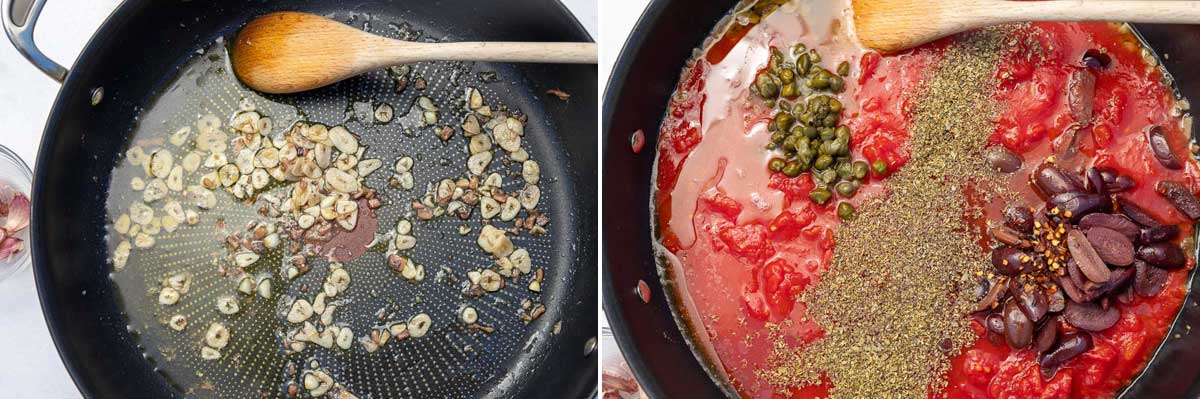
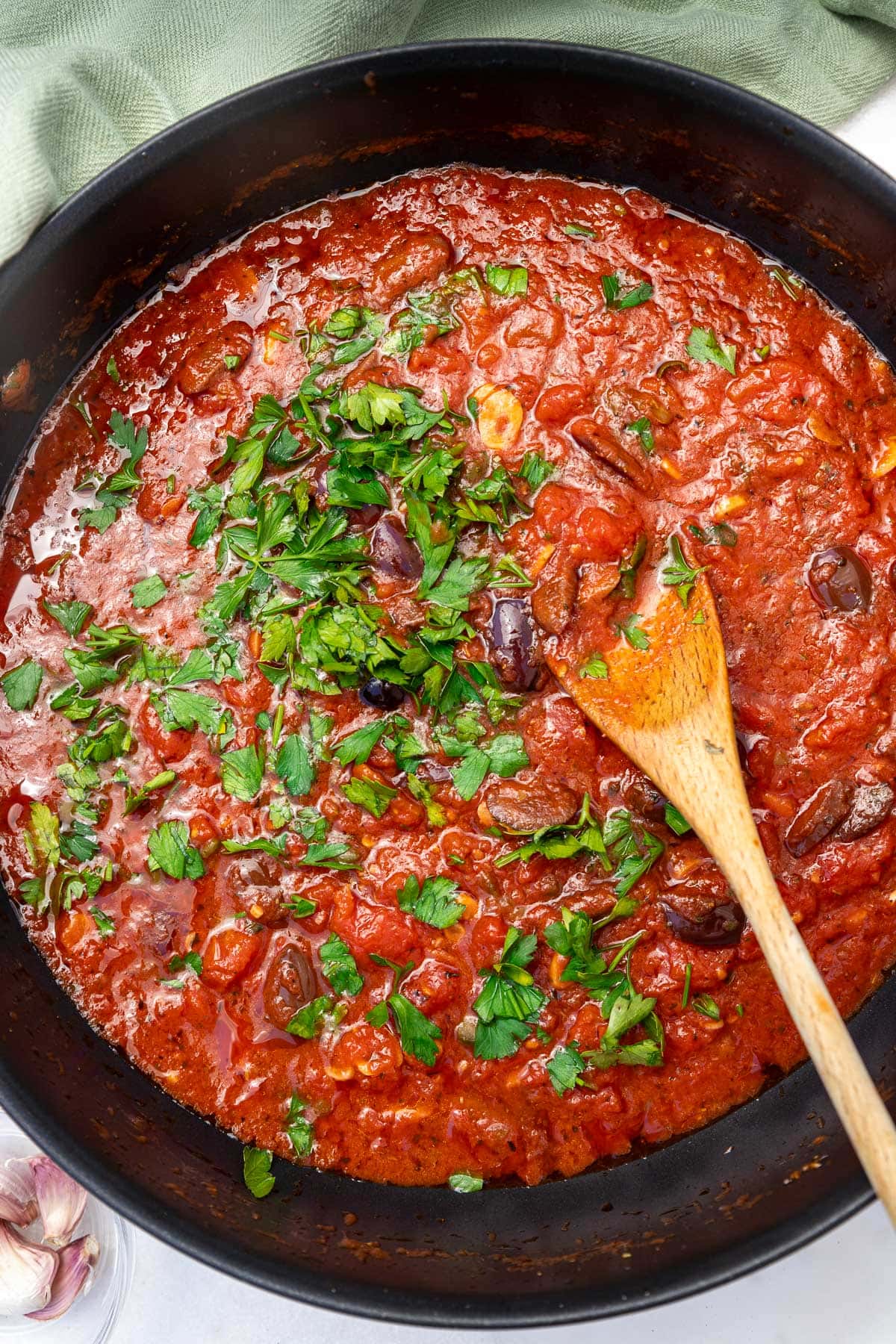
Stir the mixture well, then let it come to the boil. At this point, turn down the heat so that the sauce simmers. Let it gently bubble away and reduce, stirring once or twice, for about 20 minutes.
The sauce should now be thickened, rich and silky, but not at all dry. At this point, you can stir in most of the fresh parsley.
Now it’s time to stir the rich sauce through some just-cooked penne pasta.
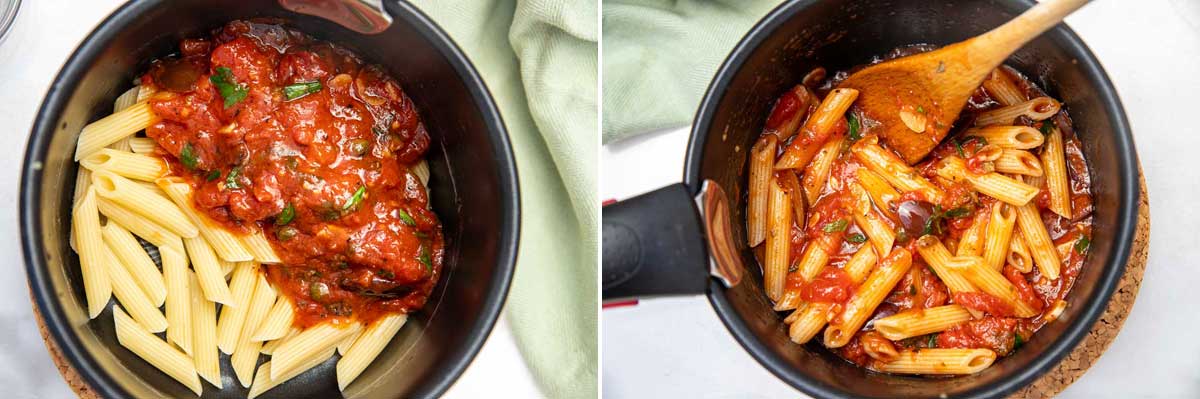
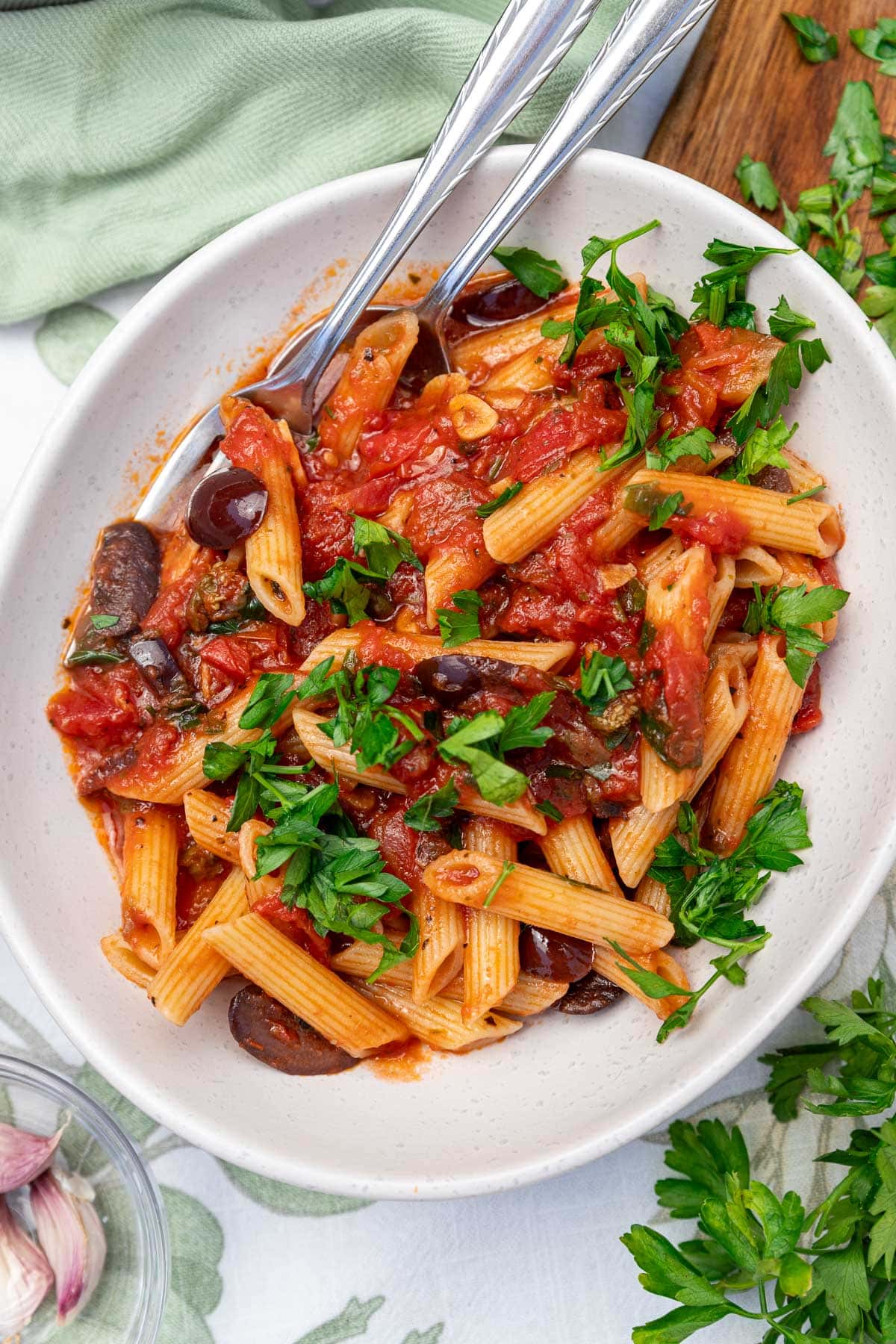
Serve immediately, with the rest of the chopped parsley sprinkled on top. Mmm!
Helen’s Top Tips
- Consider putting on an apron before making this! The number of times I’ve made red sauces without one and regretted it…
- Only mix together as much pasta and sauce as you’re going to serve immediately. The sauce will keep and reheat better without the pasta already mixed into it.
- Make sure you follow the pasta package cooking instructions to keep the pasta ‘al dente’, meaning ‘still firm to the bite’. The firm, slightly chewy texture holds onto and balances the bold, briny sauce.
- How about a heartier version with some cooked tuna, chicken or even shrimp mixed in near to the end of cooking? Alternatively, you could add raw shrimp 3 to 4 minutes before the end of the cooking time to cook them directly in the sauce.
Make ahead and storage instructions
This pasta sauce is perfect for making ahead, making it a great option for Sunday meal prep. Or even an easy dinner party!
Make the sauce at your leisure, then store in an airtight container in the fridge for up to 4 to 5 days. You can reheat it gently on the stove again before mixing in with freshly cooked pasta. If it seems a little too dry after reheating, you can just stir through a little of the pasta cooking water.
Puttanesca sauce also freezes well for up to 3 months in an airtight container, although there might be slight changes in the texture of some of the ingredients such as the olives and capers.
How to serve
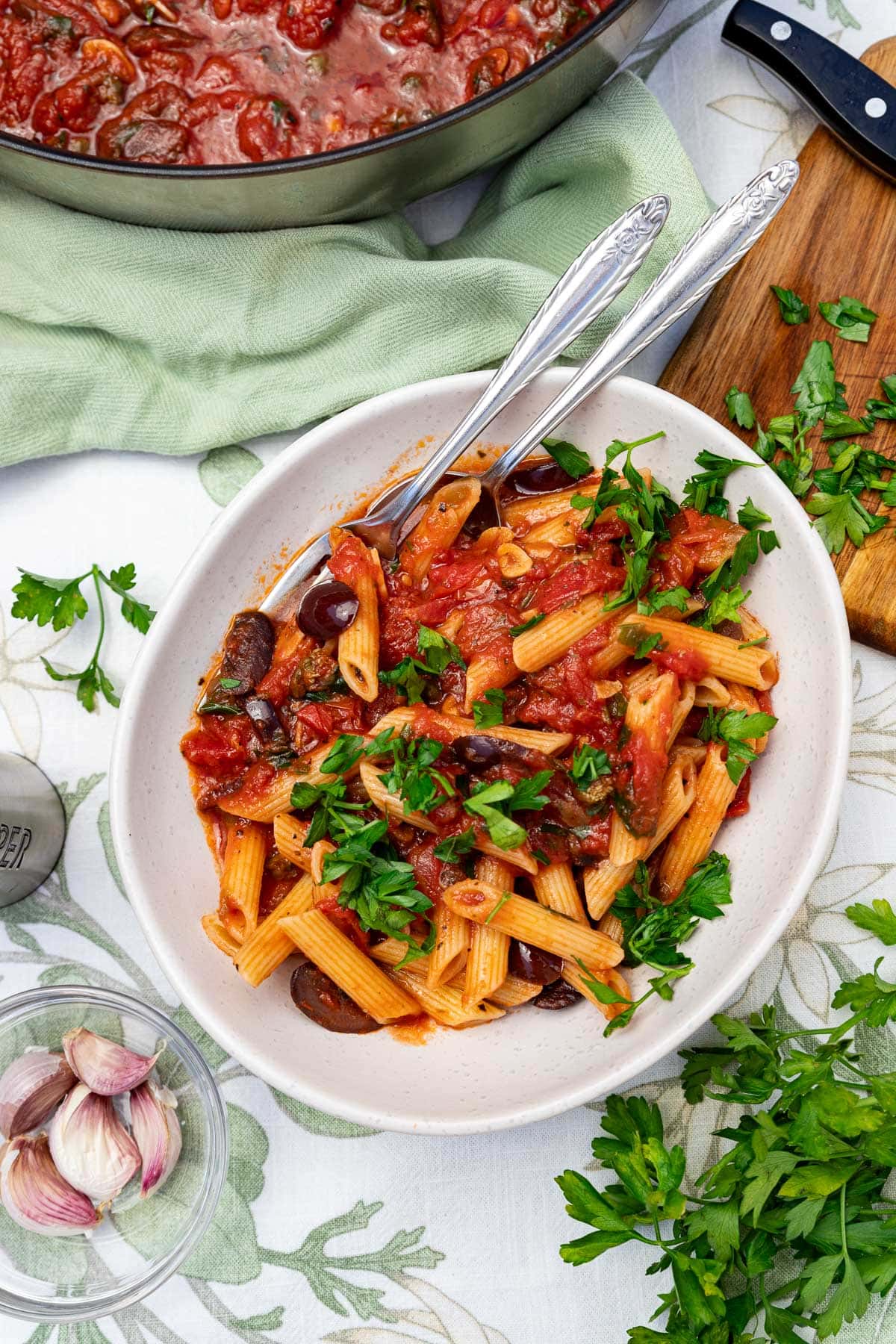
My favorite way to serve this penne puttanesca is by itself as a quick dinner, with nothing on the side.
I don’t even bother with parmesan cheese on top. Although of course you can sprinkle some over if you like. Another ‘wild card’ option is to add a generous sprinkle of pangrattato, or crispy Italian style breadcrumbs.
If you would like a veggie side to go with it, however, I would suggest a plain green salad, this easy tomato, cucumber and feta salad, or simple green vegetables such as 10-minute sauteed frozen green beans.
If serving to guests, you might also like to add some bread. Your favorite fresh bakery bread would be great, or try easy Italian focaccia bread, air fryer garlic bread, or the even easier 2-minute toasted bread with olive oil and salt.
Another way to look at this recipe is as a standalone sauce. Puttanesca sauce is absolutely delicious:
- served over seasoned meat or fish (try this easy gyro seasoning) with simple diced potatoes.
- with meatballs stirred through it. Try these popular air fryer chicken meatballs!
- as a dipping sauce for these baked chicken skewers, chicken tenders, breadsticks and more.
- spread over homemade pizza instead of regular pizza sauce. It works extremely well on top of this deep dish style Greek yogurt pizza!
- as an alternative sauce in this Greek baked eggplant dish.
Perhaps you can think of more ways to use it. Let me know. It’s a very versatile sauce!
More simple pasta dinners
- Chorizo pasta is an easy, breezy, creamy crowd-pleaser that’s on the table in about 20 minutes.
- The classic version of the recipe (no cream!) is the best pasta carbonara recipe!
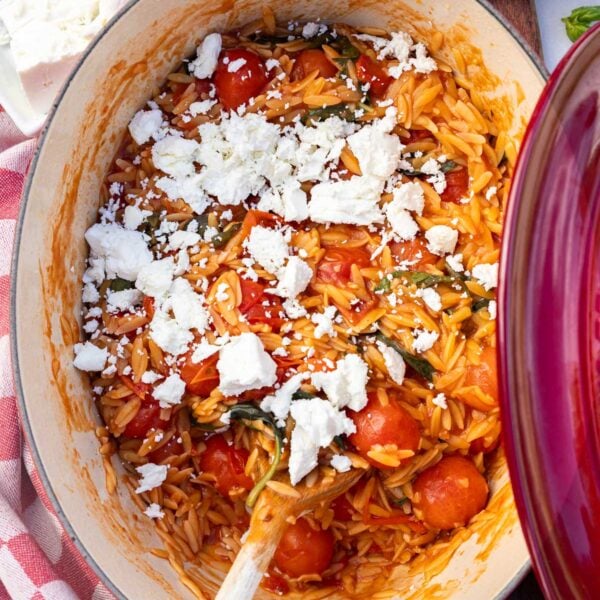
- Two veggie options: Pasta alla norma is the one to make when you don’t want meat and eggplant is in season. Make this amazing orzo pasta with tomatoes and feta if it’s cherry tomatoes that are on sale!
- This tuna pasta recipe is so lemony – packed with Mediterranean flavors, and ready in only 15 to 20 minutes.
Looking for more easy vegetarian dinners? Browse this list of 23 vegetarian Mediterranean dinners!
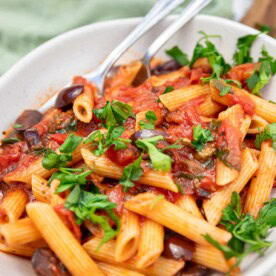
Penne Puttanesca (Easy Pantry Recipe!)
Ingredients
- ⅓ cup extra virgin olive oil, (good quality if possible)
- 7 cloves garlic, sliced thinly
- 28 ounces chopped tomatoes, (28 ounces = 800 grams = 2 regular sized cans or 1 large can)
- 6 anchovies, chopped into small pieces
- 2 tablespoons capers
- ⅔ cup black olives, roughly chopped (pitted olives make it easier)
- ¼ teaspoon chili flakes, or red pepper flakes (increase amount up to ½ teaspoon if you would like more heat)
- 1 teaspoon dried oregano, (or substitute with mixed Italian herbs)
- ½ teaspoon dried basil, (or substitute with mixed Italian herbs)
- ¼ teaspoon pepper
- 1 cup fresh parsley, washed and chopped, plus a little extra for sprinkling over to serve
- 14 ounces penne pasta, (You'll need 2.5 to 3.5 ounces per person, or 75 to 100 grams. The smaller amount is enough for me, but those with bigger appetites may want a bit more.)
Instructions
- Heat the olive oil on a medium heat in a pan with a large surface area (such as a large frying pan or cast iron pan), then add the sliced garlic and chopped anchovies. Cook for a couple of minutes without browning the garlic.⅓ cup extra virgin olive oil, 7 cloves garlic, 6 anchovies
- Add the chopped tomatoes, capers, black olives, chili flakes, dried herbs, and pepper to the pan. Half fill one of the empty tomato cans with water and add that to the pan, too.28 ounces chopped tomatoes, 2 tablespoons capers, ⅔ cup black olives, ¼ teaspoon chili flakes, 1 teaspoon dried oregano, ½ teaspoon dried basil, ¼ teaspoon pepper
- Let the sauce simmer for around 20 minutes, or until the sauce has thickened and reduced to your liking (it should be rich and silky, but not too watery, or too thick).
- Meanwhile, cook the pasta in salted boiling water until al dente (around 11 minutes, or according to the pasta package instructions) and drain.14 ounces penne pasta
- Stir the fresh chopped parsley into the sauce. Adjust the seasoning if necessary.1 cup fresh parsley
- Stir a generous amount of the puttanesca sauce into the pasta (only the amount of pasta you are going to eat immediately). There should be enough sauce for about 4 portions altogether.
- Serve immediately in bowls, sprinkling more fresh parsley over the top if you like.







How many does this serve please Helen x
Hi Glynis. It should serve 4! If there are fewer of you, I would recommend only making enough pasta for that day. You can store any spare sauce in the fridge, or even freeze it for another day.